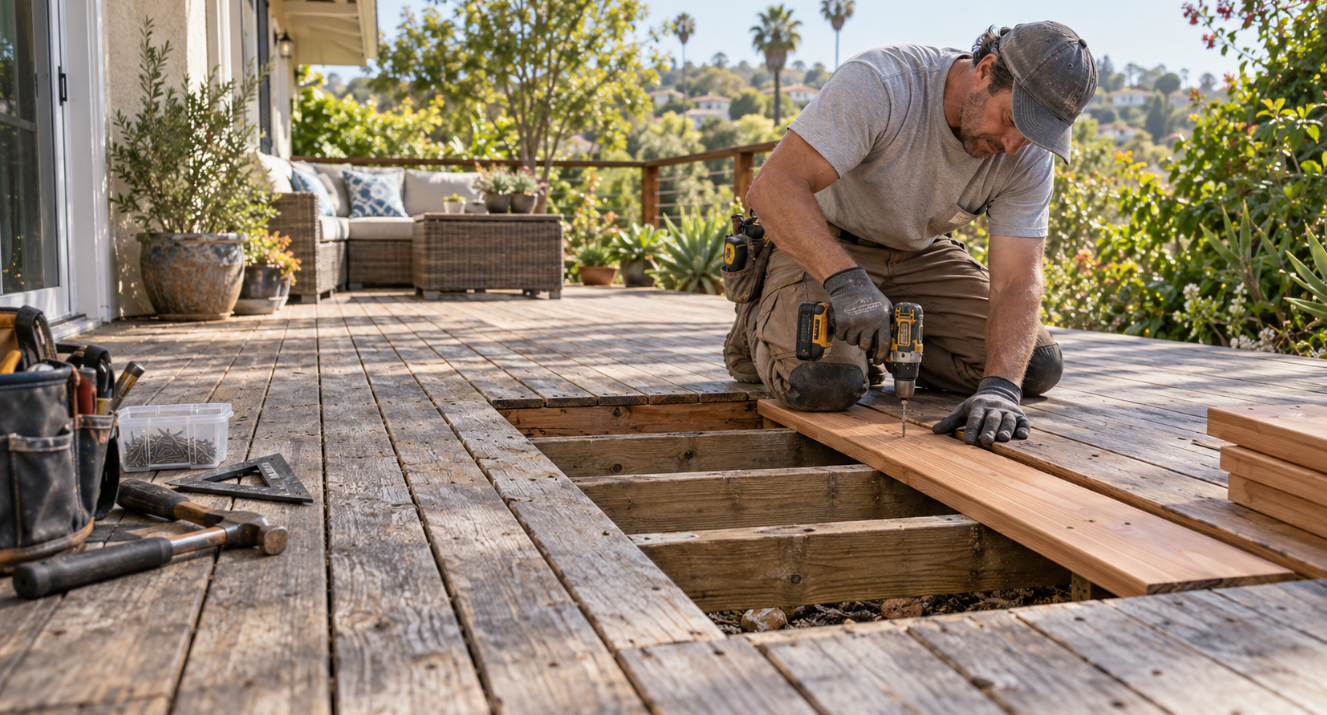
You can often replace part of a deck without rebuilding the entire structure, but the key is whether the problem is limited to the surface or extends into the framing and supports underneath. At Delphi Construction, we inspect both the deck boards and the substructure before recommending a repair, since replacing a damaged section over compromised framing won’t address the underlying problem.
A soft or cracked area might come from a few boards that need replacement. It could also point to rot or water damage below the surface. Those situations call for different scopes of work, so the first step is figuring out where the damage stops.
When can you replace part of a deck?
A partial deck repair is usually worth considering when the damage is confined to a specific area and the surrounding structure remains sound. For example, a few boards may have split, warped, or deteriorated while nearby framing stays in good condition.
The location and pattern of the damage matter. A single worn area near a planter or doorway may have a different cause than several soft spots spread across the deck. If the affected boards sit above a larger area of moisture damage, replacing only the visible boards could leave the real issue in place.
A contractor should check the visible surface and the structure supporting it. Delphi’s deck and balcony repair service includes evaluating the underlying wood framework as well as the deck boards. That broader inspection helps determine whether a limited repair makes sense or whether the project needs a wider scope.
What should be inspected before a partial repair?
The assessment should look beyond the damaged patch. Deck boards, joists, beams, posts, connections, and the point where the deck meets the home all contribute to the structure. A problem in one area can affect what needs repair elsewhere.
Pay attention to warning signs such as:
- Boards that feel soft, bounce, or move underfoot
- Wood that looks dark, crumbly, split, or visibly decayed
- Loose railings, stairs, or connections
- Water that remains on the deck instead of draining away
- Similar damage appearing in more than one area
These signs don’t tell you exactly what repair is needed, but they’re useful information to share when scheduling an assessment. Avoid pulling up boards or trying to reinforce a deck yourself if you suspect structural damage. A professional can determine what needs to be opened or tested to understand the condition underneath.
Water intrusion deserves particular attention on balconies and decks above finished areas. Staining or damage below a deck can point to a waterproofing problem, even when the walking surface looks mostly intact. Delphi handles deck waterproofing as part of a deck repair or new construction project, so the condition of the assembly matters when defining the work.
When is a larger rebuild more practical?
A larger repair or rebuild may make more sense when damage appears across several parts of the structure, when key supports have deteriorated, or when a small patch would leave nearby areas in poor condition. The same can be true when the original layout or materials make it difficult to tie a new section into the existing deck reliably.
Age alone doesn’t answer the question. An older deck may still have sound framing and need only targeted repairs. A newer deck may need more substantial work if water, pests, or poor drainage have damaged its structure. The condition of the whole assembly matters more than the age of the surface boards.
There can also be practical reasons to consider a broader project. If multiple sections need repair, replacing them together may create a more consistent surface and avoid repeated work in the same area. A contractor can explain the tradeoffs between a limited repair and a more extensive replacement after seeing the deck.
For homeowners planning a new layout or a substantially different structure, Delphi also handles new deck and patio construction. The right direction depends on the existing deck’s condition and what you want the finished space to do.
Questions to ask before approving the work
Before you agree to a partial repair, ask what the contractor inspected and which parts of the deck the proposed work covers. A useful scope should make clear what will be removed, what will be replaced, and whether the estimate includes work on framing or waterproofing if the crew finds damage beneath the surface.
It’s also reasonable to ask what could change the scope once work begins. Hidden deterioration sometimes becomes visible only after damaged boards or finishes come off. Discuss how the contractor will document additional findings, explain options, and get your approval before proceeding with added work.
California’s Contractors State License Board recommends putting project details, materials, price, permits, and changes to the scope in writing. Its home improvement contract guidance is a useful reference before you sign.
Permit requirements can depend on the work and the location. If your property is within the City of San Diego, review the city’s permit guidance or contact the local building department. Other cities in the San Diego area may have different requirements, so check with the jurisdiction that serves your address.
How to decide between patching and replacing
A partial repair can be a good option when an inspection confirms the damage is localized and the surrounding structure is in usable condition. A larger project may be the better fit when deterioration extends beyond the visible section or when repeated repairs would leave the deck with more weak spots.
Photos of the damaged area can help start the conversation, but they can’t show the full condition of framing or connections. An on-site inspection gives the contractor a chance to assess the surface, identify areas that need closer examination, and explain the available options.
If part of your deck feels unstable, shows signs of decay, or has recurring water problems, contact us at Delphi Construction to discuss an assessment. We work on deck and balcony repairs in the San Diego area, and we can help you understand whether the damage calls for a focused repair or a broader project. A clear scope based on the structure’s actual condition is the best place to start.